


I’ve always said a good cigar deserves more than a quick scroll. History does too.
And tobacco history gets especially interesting when you try to trace those golden leaves back to their true origin.
Because once someone says “tobacco in ancient Egypt,” they’re not challenging a minor detail. They’re challenging the whole map.
And that means the burden of proof has to be brutal.
One of the strangest chapters in this story began in 1976. Later, the controversy got even louder when researchers reported nicotine in Egyptian mummies — and in some cases, cocaine and hashish/THC markers too.
And boom, people jumped straight to the easy conclusion: the pharaohs smoked.
Okay. Let’s walk it slowly and stick to the facts.
What happened in 1976?
In 1976, Ramesses II didn’t travel to Paris as a king. He traveled as a problem.
His mummy was deteriorating, and there were real concerns about damage (including fungal issues), so Egypt sent him to France for examination and conservation. Think about that for a second: a pharaoh, 3,000 years after his reign, still causing governments to coordinate like he’s alive.
Now, you’ve probably heard the “passport” story.
The viral version says Ramesses II was issued a passport with the occupation “King (deceased).” It’s a great story, but the image circulating online is modern, and the passport anecdote itself remains disputed.
So I’ll say it the honest way: whether or not a literal passport existed, the point is the same—this was treated like a serious state-level transfer, not a museum shipment. The mummy spent months under scientific work in Paris, then returned to Cairo.
And that’s where the bigger story begins.
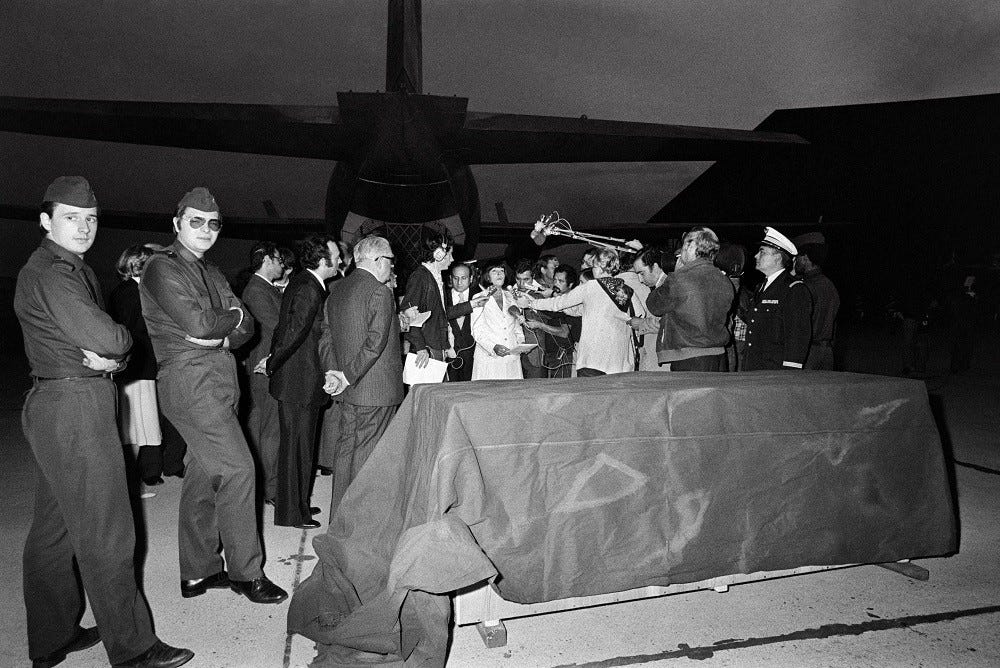
Ramesses II: the spark that started the fire
Because once a mummy leaves the tomb and enters the modern world—labs, storage rooms, exhibition cases—it stops being a sealed ancient artifact. It becomes an open system.
Linen absorbs. Resins trap chemicals. Dust carries residues. Humans handle things. Insects show up. Conservators treat objects with whatever tools their era provides.
So when you hear “they found tobacco traces around Ramesses,” the first reaction shouldn’t be “wow, ancient Egypt had cigars.”
It should be: what happened to this body after excavation?
There’s a peer-reviewed paper in Antiquity called “Rameses II and the tobacco beetle” and it basically argues the obvious grown-up explanation: a lot of “tobacco” signals can be explained by post-excavation contamination and pest control—rather than pharaohs secretly importing New World tobacco.
That paper is important because it forces the right first question:
Before you rewrite ancient history, audit the museum.
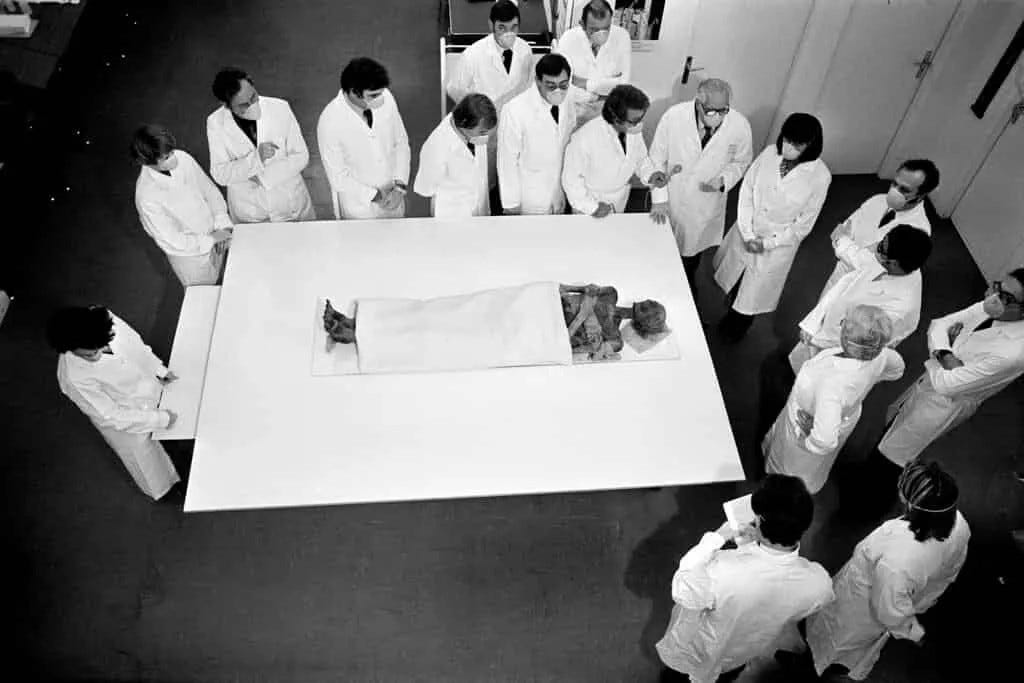
The paper that made everyone lose their minds (1992)
In 1992, Svetla Balabanova, Franz Parsche, and Wolfgang Pirsig published a short paper in Naturwissenschaften titled “First identification of drugs in Egyptian mummies.” They reported nicotine, plus cocaine and hashish (THC markers) in samples taken from nine Egyptian mummies.
And no, it wasn’t “one weird sample”. Their own table lists nicotine in soft tissue up to about ~1,045 ng/g, and nicotine in hair up to ~900 ng/g (same table also lists cocaine and hashish ranges).
That’s exactly why this story got legs. Because once you see numbers, your brain wants a story.
And the easiest story is: pharaohs smoked.
1995: “Okay, but where was it in the body?”
In 1995, Parsche & Nerlich published follow-up work in Fresenius’ Journal of Analytical Chemistry where they looked at different tissues in a mummy dated to around 950 BCE and mapped where these compounds were sitting.
Their punchline was simple:
THC highest in lung → looks like inhalation
nicotine and cocaine highest in intestines + liver → looks more like oral exposure
So even if you take their interpretation at face value, it doesn’t scream “cigar-smoking pharaoh.” If anything, it kills that image.
What it does say is: “these signals are showing up in places that make people argue.”
And here’s the line I keep repeating because it’s the only honest one:
The detections can be real.
The interpretation can still be wrong and needs more solid evidence.
Cotinine: people treat it like a magic stamp (it isn’t)
Cotinine is a metabolite of nicotine, and in modern forensics it’s used all the time as a biomarker of tobacco exposure.
So yes, when people hear “cotinine was detected,” they jump to: that proves the body processed nicotine while alive.
But a mummy isn’t a modern blood test. It’s an archaeological object that spent decades (or more) in museums, storerooms, labs, exhibition cases, and conservation workflows.
So cotinine is an indicator, not a judge’s hammer. It can support a story — it can’t be the story on its own.
The boring explanation that fits like a glove: pest control + conservation
Nicotine compounds were historically used as pest-control chemicals — including nicotine sulfate, the old-school “Black Leaf 40” type world. U.S. Environmental Protection Agency “EPA” has an archive index for nicotine sulfate with documents tied to products like Black Leaf 40 garden spray.
And Antiquity (Buckland & Panagiotakopulu) says the quiet part out loud: archaeologists can be too credulous with “scientific findings” while ignoring post-excavation history. Their paper examines the Ramesses II tobacco claim and offers an alternative model: a 19th-century insecticide used in conservation, plus contamination issues — and it also throws doubt on cannabis and cocaine claims in ancient Egypt.
This is why I keep saying: audit the museum.
2025: the “mummy smell” study (and why it matters more than people realize)
Now add something modern, clean, and frankly brutal.
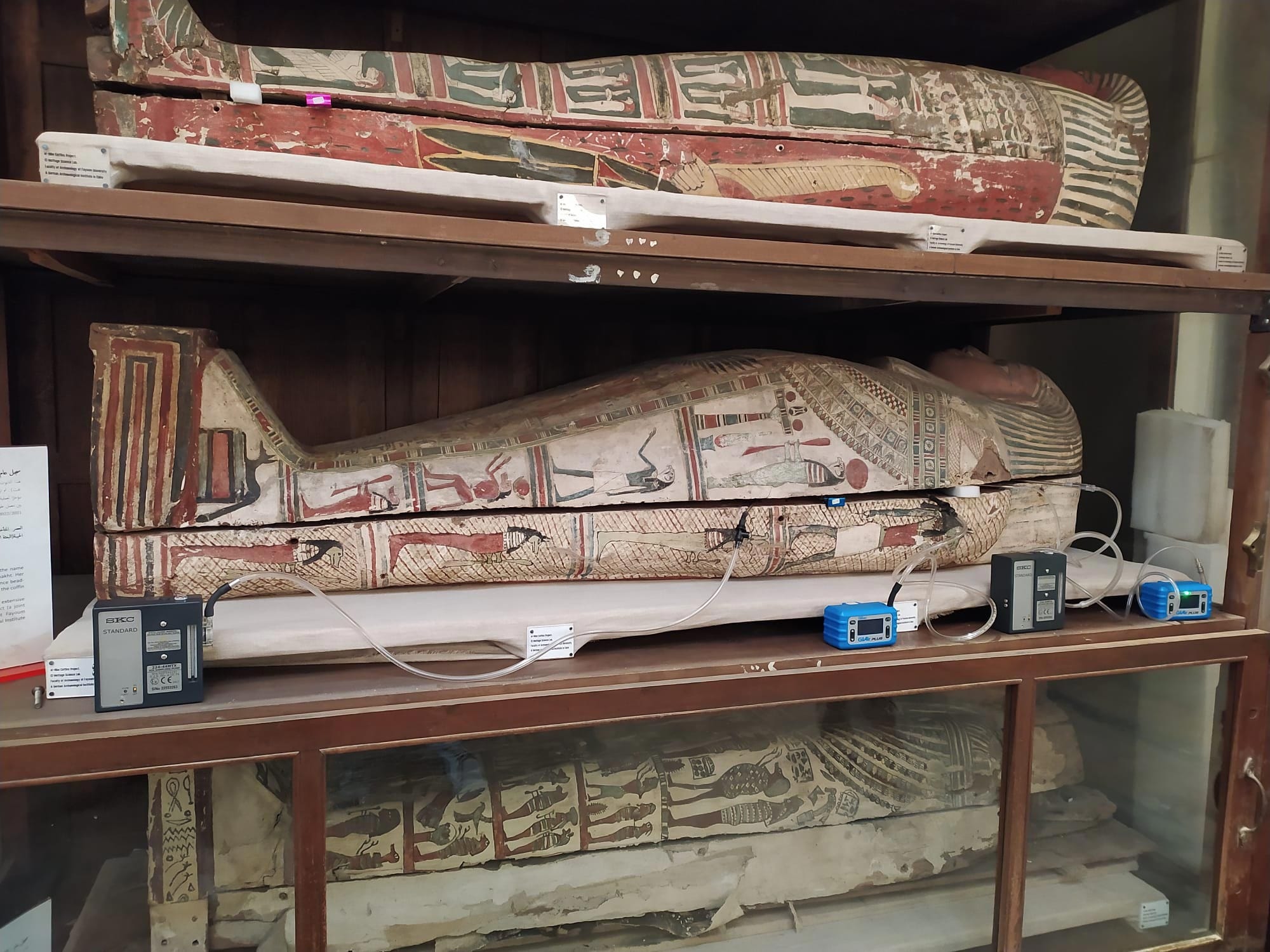
In 2025, a JACS paper analyzed the volatile compounds around nine mummified bodies in the Egyptian Museum in Cairo using GC-MS-olfactometry plus a trained sensory panel — basically: they did chemistry and they literally smelled the samples in a controlled way.
Their results are the part that should make everyone shut up and listen:
They classified odor compounds into origins including
(i) original mummification materials,
(ii) plant oils used for conservation,
(iii) synthetic pesticides,
(iv) microbial products.
The ACS press release summarizes it in plain language and even gives the classic descriptors (“woody”, “spicy”, “sweet”) and the point that display cases can concentrate volatiles over time.
The researchers collected air around the remains by carefully inserting a tube between the base and lid of the coffin. Then they analyzed the samples using gas-chromatography-mass-spectrometry-olfactometry (GC-MS-O) and an eight-member trained sensory panel. They discovered that:
The most frequent sensory notes describing the smells were “woody,” “spicy” and “sweet,” followed by “incense-like,” “stale” and “rancid.”
There was no correlation between a mummy’s conservation state and its smell intensity. But the conservation state did reflect the overall composition of smells.
The mummy with the strongest odor might have been the person with the highest social status in life, reflecting high-quality mummification practices.
Mummies on display had higher concentrations of compounds carrying a scent, presumably because these compounds accumulate over time in their display cases.
So if modern pesticides and conservation oils are detectable today in museum mummies… then nicotine showing up in a mummy doesn’t automatically mean “ancient tobacco habit.” It can mean: modern conservation life left chemical fingerprints.
“But nicotine exists in food!” — yes, but don’t abuse that argument
There is trace nicotine in some foods and teas. This isn’t folklore.
A 1991 paper (Davis et al.) measured nicotine in foods and teas and found average nicotine around:
tomato: 7.3 ng/g (wet weight)
potato: 15 ng/g (wet weight)
and teas ranging from non-detectable up to 285 ng/g in instant teas.
And here’s the detail everyone ignores: in that same study, nicotine was not detected in eggplant (at their detection limits).
So yes — background nicotine exists.
No — it doesn’t magically explain big, dramatic mummy readings by itself.
The “African tobacco” detour (Nicotiana africana)
Some people try a clever escape: “What if it wasn’t American tobacco? What if it was African wild tobacco?”
Nicotiana africana exists, sure. But chemically it’s not the same thing people imagine. A PLOS ONE paper reports its alkaloids are dominated by nornicotine and anabasine, while nicotine is much lower (reported around 0.66 µg/g dry mass in their plants).
So even if someone wants to invent a trade story, the chemistry doesn’t hand them a clean match — and archaeology doesn’t hand them a trade route either.
The transatlantic fantasy (and why cocaine doesn’t force it)
Nicotine can be explained without drama. Cocaine is the part that makes people start writing Atlantis scripts.
But a surprising molecule doesn’t automatically prove a surprising voyage.
Even the Antiquity paper pushes the discussion back to boring reality: post-excavation contamination and conservation history can wreck interpretation.
Also, cocaine is a plant defense chemical too — there’s classic work showing cocaine can function as an insecticide in coca leaves.
That doesn’t “solve” the mummy story, but it’s a reminder: alkaloids don’t come with a travel diary.
My take stays simple: if Egypt had repeated contact with the Americas, you’d expect a broader footprint than controversial lab traces.
What modern science does show: Egyptians had their own real ritual chemistry
This part makes me happy because it’s real Egypt, not imported fantasy.
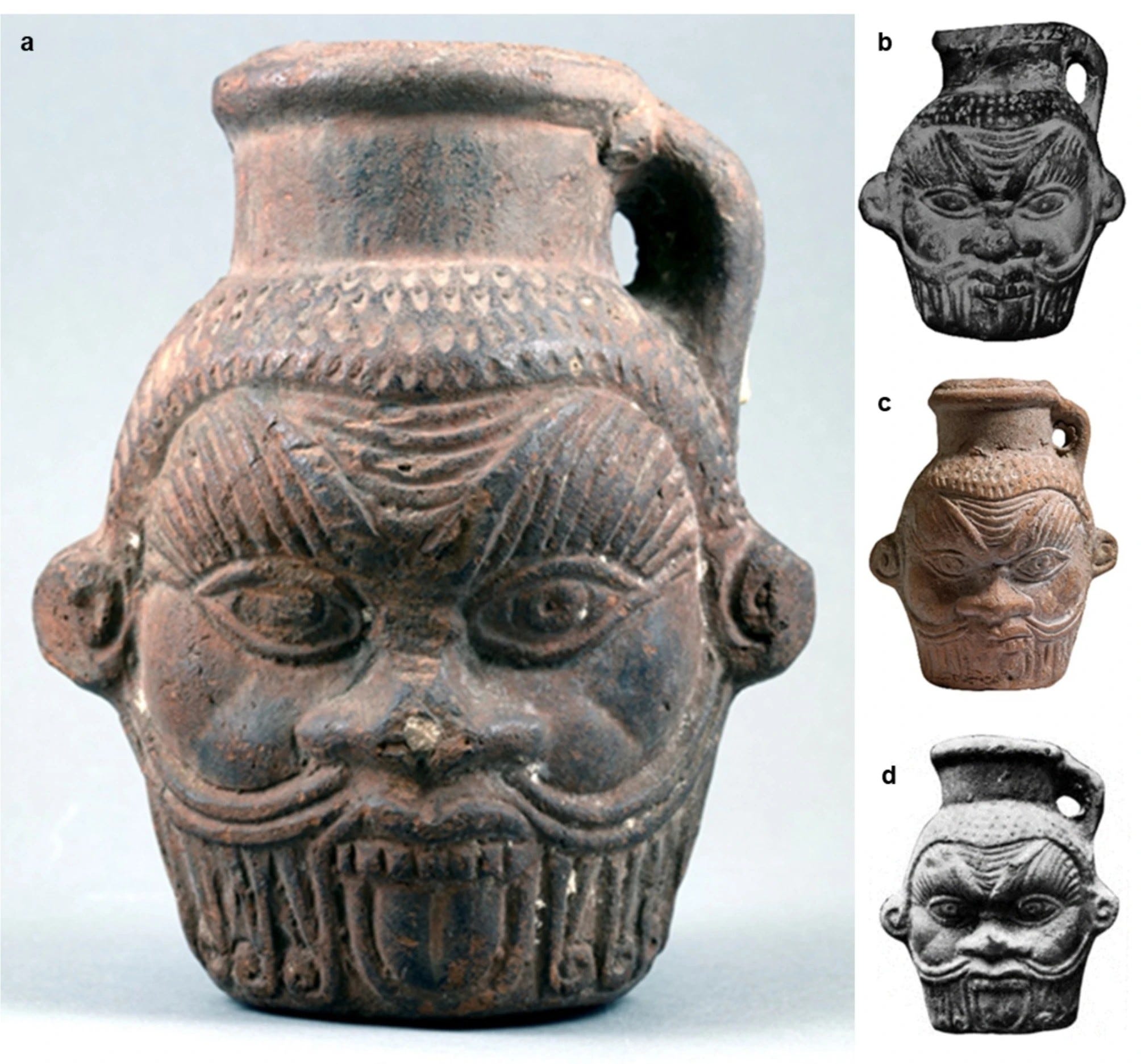
A 2024 Scientific Reports paper analyzed residues from a Ptolemaic Bes-vase and found traces consistent with Peganum harmala, blue lotus, and other ingredients in a ritual mixture.
And here’s the important part for this story:
They found coherent, local, culturally plausible psychoactive/ritual chemistry — without needing tobacco.
The Nile’s first real tobacco evidence shows up… exactly when it should
Old Dongola archaeobotany reports tobacco seeds (Nicotiana tabacum) in northeastern Africa with the earliest evidence dating to the mid-17th century, and the paper argues tobacco reached Nubia via the Ottoman Empire through connections with Egypt after around 1603 CE.
That’s tobacco behaving like tobacco: late arrival, historically sensible footprint.
Not “Ramesses had a cigar.”
Verdict
So, did Ramesses II use tobacco?
No credible evidence says he did.
What we have is a real chemical controversy, a messy post-excavation history, and a contamination pathway that fits the facts better than fantasies about pharaohs importing New World plants.
The labs didn’t necessarily lie. But chemistry alone doesn’t get to rewrite history.
References
Encyclopædia Britannica (1911), Tobacco (en.wikisource.org)
Balabanova et al., 1992, Naturwissenschaften (pubmed.ncbi.nlm.nih.gov)
Parsche & Nerlich, 1995, Fresenius J Anal Chem (link.springer.com)
Naturwissenschaften critiques (1993) (pubmed.ncbi.nlm.nih.gov)
Buckland & Panagiotakopulu, 2001, Antiquity (cambridge.org)
Davis et al., 1991, Food Chem Tox (dietary nicotine) (pubmed.ncbi.nlm.nih.gov)
Tanasi et al., 2024, Scientific Reports (Bes-vase multi-omics) (nature.com)
Paolin et al., 2025, JACS (mummy odor & conservation chemicals) (pubmed.ncbi.nlm.nih.gov)
Nasreldein et al., 2023, JAS: Reports (Old Dongola tobacco seeds) (sciencedirect.com)
EPA archive index for nicotine sulfate (archive.epa.gov)
N. africana alkaloids (PLOS ONE) (pmc.ncbi.nlm.nih.gov)